How to Move to Canada in 2026: Complete Study, Work Visa & PR Step-by-Step Guide
Work Visa & PR Step-by-Step Guide
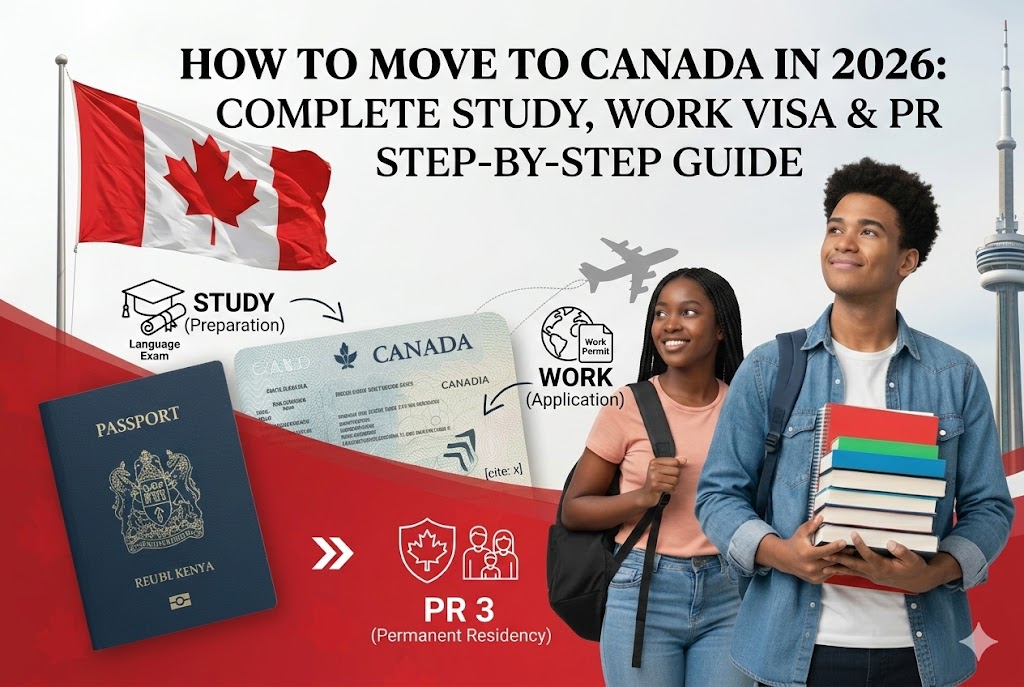
How to Move to Canada in 2026: Complete Study, Work Visa & PR Step-by-Step Guide. Moving to Canada in 2026 remains one of the most realistic and structured immigration goals for students, skilled workers, and families worldwide. With transparent immigration pathways, a strong economy, multicultural cities, and clear permanent residency (PR) options, Canada continues to attract newcomers seeking education, career growth, and long-term settlement.
If you’re planning to move, this comprehensive guide will walk you step by step through:
- Study permit pathway
- Work visa options
- Permanent Residency (PR) programs
- Required documents
- Costs and timelines
- Strategic tips for success
Let’s break everything down in a practical, easy-to-follow way.
Why Move to Canada in 2026?
Canada continues to rank among the top countries for immigration due to:
- Strong demand for skilled workers
- High quality of life
- Public healthcare system
- Globally recognized education system
- Clear pathway from temporary visa to PR
- Multicultural and inclusive society
With ambitious immigration targets and structured selection systems, Canada offers multiple legal pathways to move and settle.
Overview: Three Main Ways to Move to Canada
There are three primary routes:
- Study in Canada → Post-Graduation Work Permit → PR
- Apply for a Work Visa Directly
- Apply for Permanent Residency (PR) from Abroad
Each pathway has its own requirements and timeline. Let’s explore them in detail.
How to Move to Canada in 2026: Complete Study, Work Visa & PR Step-by-Step Guide
Pathway 1: Study in Canada (Student Route)
Studying in Canada is one of the most popular and strategic ways to move permanently.
Step 1: Choose a Designated Learning Institution (DLI)
You must apply to a recognized Canadian college or university. Popular provinces include:
- Ontario
- British Columbia
- Alberta
- Quebec
Programs in IT, healthcare, engineering, business, and skilled trades are especially strong.
Step 2: Receive a Letter of Acceptance
Before applying for a study permit, you need:
- Official acceptance letter
- Tuition fee payment receipt (partial or full)
- Program details
Step 3: Apply for a Study Permit
You apply online through Immigration, Refugees and Citizenship Canada (IRCC).
Required Documents:
- Valid passport
- Letter of acceptance
- Proof of funds
- Statement of purpose
- Medical exam (if required)
- Biometrics
Financial Requirement (Estimated 2026):
- Tuition fees: CAD 15,000–35,000 per year
- Living costs: Approximately CAD 20,000 per year
Step 4: Work While Studying
International students can:
- Work part-time during studies
- Work full-time during scheduled breaks
This helps offset living expenses and gain Canadian experience.
Step 5: Apply for Post-Graduation Work Permit (PGWP)
After completing your program, you can apply for a PGWP.
- Duration: Up to 3 years (depending on program length)
- Open work permit (no job offer required)
This is the most important step toward permanent residency.
Step 6: Transition to Permanent Residency
After gaining Canadian work experience, you can apply through:
- Canadian Experience Class (CEC)
- Provincial Nominee Program (PNP)
This study-to-PR pathway is one of the most secure routes.
Pathway 2: Work Visa (Without Studying)
If you already have experience and qualifications, you may apply directly for a work visa.
Option A: Employer-Specific Work Permit
You need:
- Valid job offer
- Labor Market Impact Assessment (LMIA) (in most cases)
Employers must prove they couldn’t find a Canadian candidate first.
Option B: Open Work Permit
Available under specific programs, including:
- Spousal sponsorship
- International agreements
Option C: Global Talent Stream
This fast-track program allows Canadian employers to hire highly skilled tech professionals quickly.
Processing time can be as short as two weeks.
Pathway 3: Apply for Permanent Residency (PR) Directly
Canada’s PR system is structured and points-based.
Express Entry System
The main PR system is Express Entry, which manages applications under:
- Federal Skilled Worker Program
- Federal Skilled Trades Program
- Canadian Experience Class
Step-by-Step Express Entry Process:
- Check eligibility
- Take language test (IELTS or CELPIP)
- Get Educational Credential Assessment (ECA)
- Create online profile
- Receive CRS score
- Wait for Invitation to Apply (ITA)
- Submit PR documents
- Receive Confirmation of Permanent Residence (COPR)
Comprehensive Ranking System (CRS)
Points are based on:
- Age
- Education
- Work experience
- Language proficiency
- Canadian experience
- Job offer (if applicable)
Higher CRS scores increase chances of selection.
Provincial Nominee Programs (PNPs)
Each province has its own immigration streams.
Popular provinces:
- Ontario
- British Columbia
- Alberta
- Saskatchewan
PNPs can:
- Add 600 CRS points
- Fast-track PR approval
Some provinces target specific occupations like healthcare, IT, agriculture, or trades.
Costs to Move to Canada in 2026 (Estimated)
| Category | Estimated Cost (CAD) |
|---|---|
| Language Test | 300 |
| ECA | 200–300 |
| Study Permit | 150 |
| Work Permit | 155 |
| PR Application Fee | 1,365 |
| Biometrics | 85 |
| Medical Exam | 200–400 |
| Proof of Funds (Single Applicant) | ~14,000+ |
Costs vary depending on family size and pathway.
Processing Times in 2026 (Estimated)
| Visa Type | Processing Time |
|---|---|
| Study Permit | 4–12 weeks |
| Work Permit | 2–16 weeks |
| Express Entry PR | 6–8 months |
| PNP PR | 8–12 months |
Timelines vary based on country of residence and application volume.
Language Requirements
Canada accepts:
- IELTS General (for PR)
- IELTS Academic (for study)
- CELPIP
Higher language scores significantly improve CRS ranking.
In-Demand Occupations in 2026
Canada continues to face shortages in:
- Software engineers
- Healthcare workers
- Nurses
- Electricians
- Construction managers
- Truck drivers
- Early childhood educators
- Cybersecurity specialists
Choosing a high-demand occupation increases your success rate.
Step-by-Step Example: Skilled Worker Moving Directly to PR
- Take IELTS (CLB 9+ recommended)
- Get ECA report
- Create Express Entry profile
- Improve CRS score (if needed)
- Receive ITA
- Submit documents within 60 days
- Receive COPR
- Land in Canada as PR
Step-by-Step Example: Student to PR Path
- Apply to Canadian college
- Get study permit
- Graduate
- Obtain PGWP
- Work for 1–2 years
- Apply under Canadian Experience Class
- Receive PR
Proof of Funds Requirement
Applicants must show sufficient settlement funds (unless exempt).
Example (2026 estimates):
- Single applicant: approx. CAD 14,000
- Couple: approx. CAD 17,000
- Family of four: approx. CAD 25,000
Funds must be:
- In bank account
- Available and transferable
- Maintained for required period
Benefits of Permanent Residency
PR holders receive:
- Right to live and work anywhere in Canada
- Access to public healthcare
- Social benefits
- Pathway to citizenship after eligibility
- Ability to sponsor family
After three years of physical presence, PR holders may apply for Canadian citizenship.
Common Mistakes to Avoid
- Submitting incomplete documents
- Low IELTS score
- Ignoring PNP options
- Choosing non-DLI institutions
- Insufficient proof of funds
- Missing application deadlines
Proper preparation reduces rejection risks.
Is Canada Still Accepting Immigrants in 2026?
Yes. Canada continues to maintain high immigration targets to address labor shortages and population growth needs. Immigration remains central to economic development.
How to Move to Canada in 2026: Complete Study, Work Visa & PR Step-by-Step Guide
Final Thoughts
Moving to Canada in 2026 is achievable — but it requires strategy, documentation, and planning.
Whether you choose:
- Study route
- Work visa route
- Direct PR route
Each pathway has clear steps and defined requirements.
For many applicants, the study-to-work-to-PR pathway remains the most secure option. Skilled professionals with strong language scores may qualify directly through Express Entry.
The key to success is:
- Strong language proficiency
- Complete documentation
- Understanding CRS scoring
- Targeting high-demand occupations
- Applying through correct programs
Canada’s immigration system rewards preparation and transparency. With careful planning and the right approach, your move to Canada can become a realistic and successful goal in 2026.
Start early, stay organized, and choose the pathway that best matches your qualifications and long-term settlement plans.